


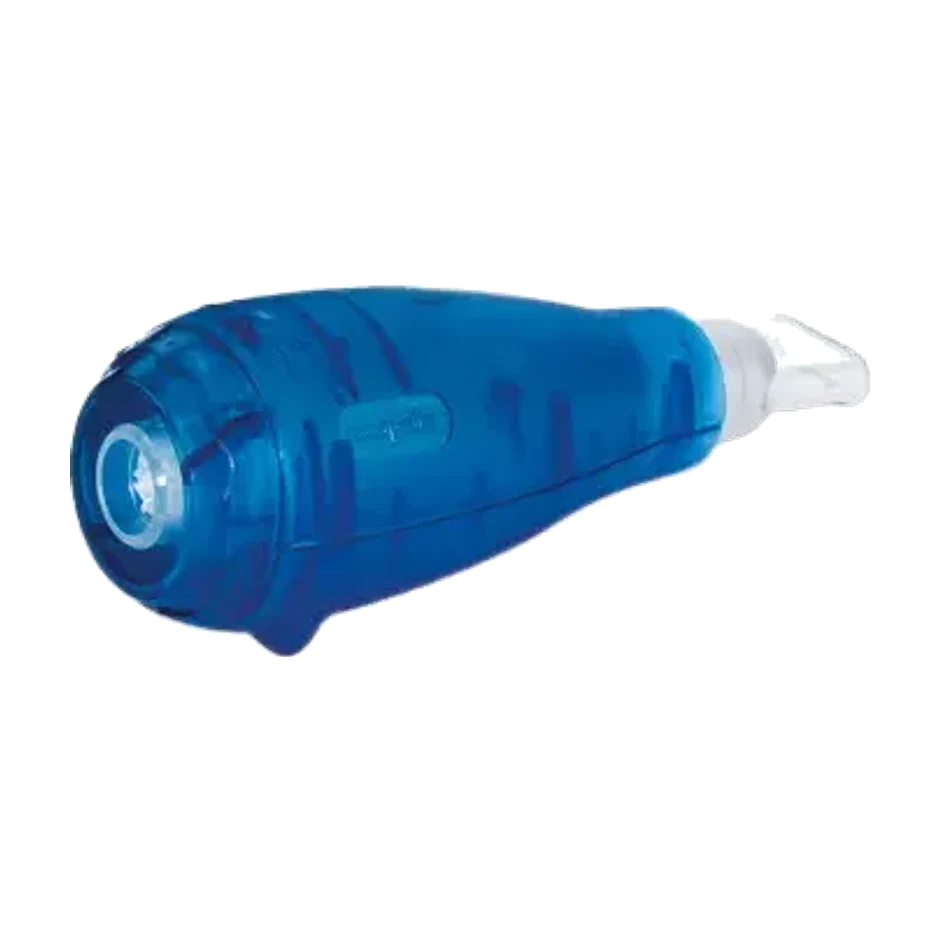
What it is
The Acapella combines two things in one small device: positive expiratory pressure (PEP), which holds your airways open as you breathe out, and vibration, which shakes mucus off the airway walls so it can move up to where you can huff it out.
Inside, a counterweighted valve opens and closes rapidly as you breathe out, which is what creates the flutter you can feel in your chest. Because it doesn’t rely on gravity, you can use it sitting up, leaning forward or lying down, whichever position suits you best.
Who it's for
- Cystic fibrosis, COPD, bronchiectasis, asthma and other lung conditions where mucus builds up.
- Atelectasis (areas of collapsed lung), including after surgery.
- Adults and children from about five years old who can follow the instructions, or younger children with an adult helping.
How to use it
Wash your hands first, and check the resistance dial is on the setting your physiotherapist set for you.
- Get comfortable. Sit upright with your elbows supported, for example resting on a table or on the arms of a chair.
- Seal your lips around the mouthpiece and breathe in through the device, using your diaphragm (your belly moves out, not your shoulders). Take a bigger breath than normal, but don’t fill your lungs completely.
- Hold that breath for 2 to 3 seconds. This gives the air time to get behind the mucus.
- Breathe out through the device slowly and steadily for about 6 to 9 seconds. Breathe out actively, but not forcefully, and keep a tight seal so no air escapes around the mouthpiece.
- Repeat for 10 to 20 breaths. Try to hold off coughing until the end of the set.
- Take the device out and do 2 to 3 huffs. A huff is a short, sharp breath out with your mouth wide open, like fogging up a mirror or blowing out candles. Cough if mucus has come up.
Choosing a setting
- The dial changes how much resistance you breathe against. Your physiotherapist sets your starting point, usually the lowest setting (dial turned fully anticlockwise), and increases it as you get stronger.
- The right setting is one where you can breathe out comfortably for the full count without running out of puff.
- Turn the dial clockwise for more resistance, anticlockwise for less. More is not better: if it feels like hard work or makes you cough straight away, ease it back and tell us.
Cleaning & care
After each use
- Take the mouthpiece off and soak it in warm soapy water.
- Rinse it with clean water.
- Shake out the water and let it air dry with the mouthpiece end pointing down.
Weekly deep clean
- Take the device apart into its four parts: cover, mouthpiece, base and rocker assembly. Don’t pull the rocker assembly itself apart.
- Soak the parts in warm soapy water for 15 to 20 minutes, or wash them in the dishwasher on the top rack only.
- To disinfect, boil the cleaned parts in distilled water for 5 minutes, then let them cool and air dry fully.
- Make sure everything is completely dry before you put it back together.
Avoid: putting it in the bottom of the dishwasher, and reassembling it while parts are still damp.
When to replace it
The Acapella is a single-patient device, so never share it with anyone else. ICU Medical doesn’t publish a set replacement interval, so replace it if it’s damaged, if the flutter feels weaker than it used to, or when your physiotherapist recommends it.
Things to be careful about
- Tell us before using it if you have had recent facial, mouth, skull or oesophageal surgery, or a facial injury.
- It isn’t suitable if you have an untreated pneumothorax (collapsed lung), a perforated eardrum or other middle ear problem, active coughing up of blood, or acute sinusitis or nosebleeds.
- Stop and call us if you feel unwell, very breathless or nauseated while using it, or if using it makes your breathing harder rather than easier.
- Breathing out at very high pressure can do more harm than good. Steady and comfortable beats forceful.
Sources: ICU Medical Acapella Choice use & care guide (ANZ) · ICU Medical Acapella product page. Instructions are summarised from the manufacturer and may change; always keep the leaflet that comes with your device.